叁去壹 (Sam Hui Yat) dim sum in Sai Ying Pun

Posted on

I am not generally a fan of dim sum or yum cha, the terms usually used interchangeably to describe a Chinese brunch popularized by the Cantonese (and exported to the West by them). Dim sum literally means “bite heart” or “touch the heart” says Wikipedia, while Yum cha literally means “drink tea” and describe the … Continue reading “叁去壹 (Sam Hui Yat) dim sum in Sai Ying Pun”

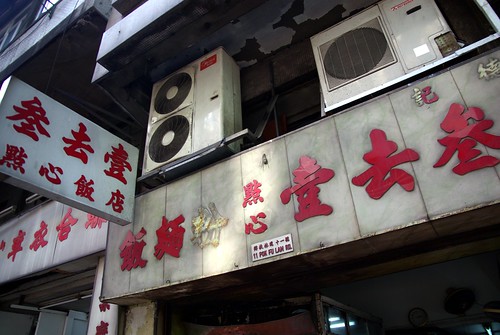
叁去壹點心粉麵飯

I am not generally a fan of dim sum or yum cha, the terms usually used interchangeably to describe a Chinese brunch popularized by the Cantonese (and exported to the West by them). Dim sum literally means “bite heart” or “touch the heart” says Wikipedia, while Yum cha literally means “drink tea” and describe the activity of relaxing around a cup of tea (and eating dim sum, sometimes).

I’ve typically only eaten in large dim sum halls, here in Hong Kong as well as back home in Montreal. In Hong Kong, family would bring me to restaurants with overly nice decors. However, my tastes tend to range around the “beau, bon, pas cher”, a French expression from home that basically means “nice, good, inexpensive”.
叁去壹點心粉麵飯
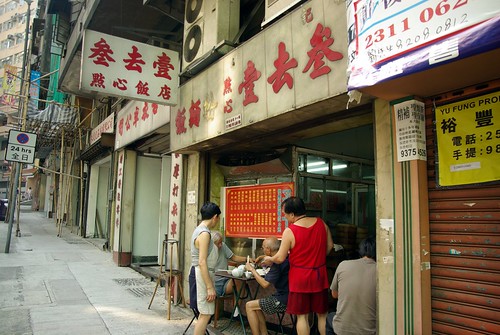
叁去壹(點心粉麵飯) = Sam Hui Yat = Three Goes One
叁去壹點心粉麵飯
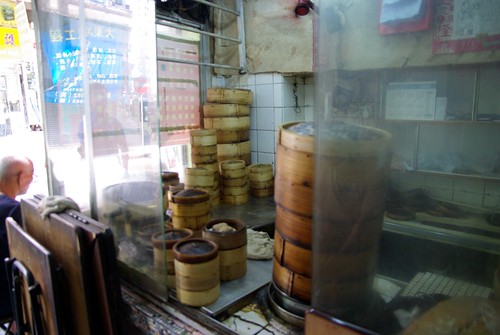
Steamers

From the tram stop in Sai Ying Pun (西營盤), we walked only a few minutes to get to 叁去壹 (Sam Hui Yat – something like Three Goes One). Located at the very beginning of Pokfulam Road (corner with First St), which eventually leads to the University of Hong Kong, some 200m up the hill, the restaurant is in fact an unassuming eatery, with no more than a dozen tables for about 30 clients at once. It was a far cry from what I imagined, perhaps because I’ve always been used to being served dim sum in large restaurants (here in Hong Kong, restaurants with carts also virtually don’t exist anymore).

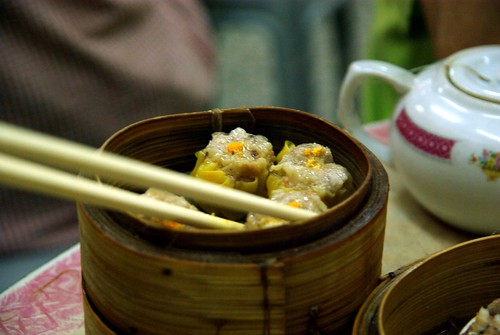
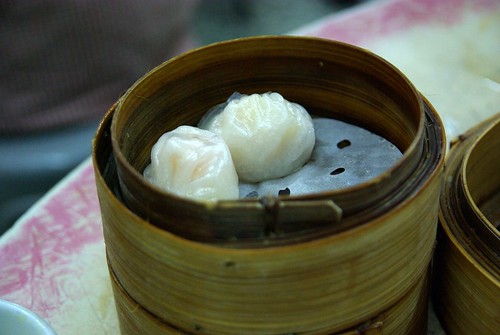
I originally horribly missed my first occasion to eat here with Chinese speakers and on the time that I actually went, I was only with my non-Chinese-speaking friend. Why is that so important? Because there is not a single English character in the entire restaurant! Unable to get a good hold of the menu, I resorted to asking the waiter, who was very patient and cordial in helping me out. After listening to the chef’s suggestions, I decided to go for sure bets, namely siumai (燒賣 – seasoned ground pork in wrapper), har gow (蝦餃 – shrimp dumpling) and steamed black-bean spare ribs (豉汁排骨). It’s also a surcharge of $HKD3 for tea per person.

For the record, the siumai was juicy inside and the har gow’s shrimp crunched right under one’s teeth and the ribs were very tender. Don’t feel intimidated by the “minimalistic” setting, because the food is in fact excellent.

At the front of the restaurant was the “steamers station”, where the chef (the guy in a red sleeveless shirt) presumably steamed orders of dumplings and other dim sum. The order came very quickly, as you’d expect for a diner. To pay, don’t necessarily expect the waiter to give you the bill: just hand him the money as if you knew the total price and he will count the number of steamers (they are invariably $HKD9) or lotus leaves that you have spread out in front of you. It’s also a surcharge of $HKD3 for tea per person.
叁去壹點心粉麵飯
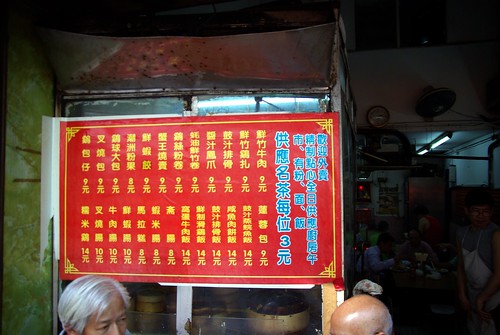
Menu (click for translation notes on Flickr)

Of course, the menu is all in Chinese, and there is another menu in the restaurant that is for non-dim sum dishes, such as fried rice and noodles. Aside from those aforementioned, Sam Hui Yat has a complete lineup of dim sum classics: fong zao (鳳爪 – chicken feet), chiu chow fun go (潮州粉果 – Chaozhou-style dumplings), char siu pao (叉燒包 – pork bun), lo mai gai (糯米雞 – lotus leaf chicken rice) and a variety of cheong fun (腸粉 – rice rolls).
Har Gow - 叁去壹點心粉麵飯
Har Gow (蝦餃)

Siumai - 叁去壹點心粉麵飯
Shaomai (燒賣)

It is to be noted that the restaurant closes at 2:30PM in the afternoon. To get there, the easiest way is to take the tram going west from Central or Sheung Wan MTR (take the trams going to Whitty Street Depot or Kennedy Town). Then, walk up the slope on Western St., until you get to Pokfulam Road.

11 Pokfulam Road, Sai Ying Pun, Sheung Wan (map)
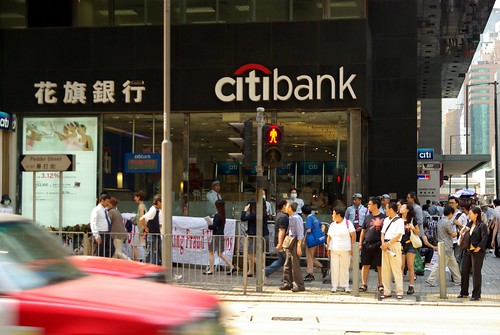
Automated protest in front of the Citibank in Central

Posted on

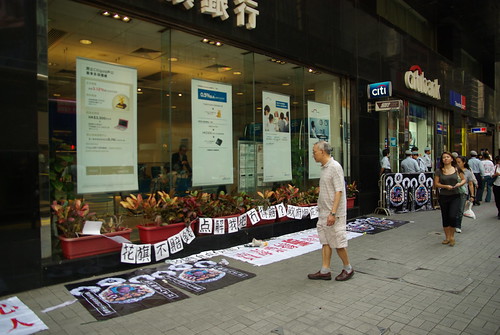
Ah Hong Kong, you never cease to amaze me. These are pictures taken in Central, the city’s main international business area, in front of the local Citibank branch. A protest is going on: the people who instigated it are asking Citibank for compensation for failed financial products that they bought, namely something called equity-linked note… … Continue reading “Automated protest in front of the Citibank in Central”

Automated protest at CitiBank in Central, HK

Automated protest at CitiBank in Central, HK

Automated protest at CitiBank in Central, HK

Automated protest at CitiBank in Central, HK

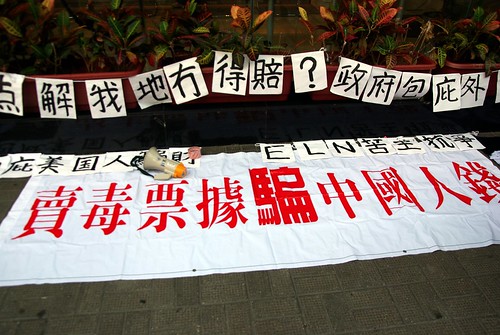
Ah Hong Kong, you never cease to amaze me. These are pictures taken in Central, the city’s main international business area, in front of the local Citibank branch. A protest is going on: the people who instigated it are asking Citibank for compensation for failed financial products that they bought, namely something called equity-linked note

But where are the protesters?

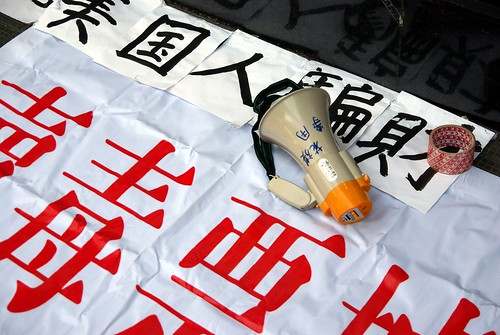
Answer: well, on this occasion, they were there and distributing fliers while a loudspeaker blurted out anti-Citibank slogans. But days earlier when I passed by, they were not. And actually, on that day, the whole protest was automated, while the protesters went for lunch or something!

Here is an audio recording that I made with a lady who was nice enough to explain the situation (in Cantonese — okay, I did not get a word of what she said):
http://commeleschinois.ca/media/ds400194.wma

The lady told me that their group has a website: http://www.lbv.org.hk/

榕樹灣 (Yung Shue Wan), Lamma Island

Posted on

Last Sunday, I visited Lamma Island (南丫島) with some friends who wanted to go to the beach. At around 10km between its northern and southern tips, Lamma is one of the said “outlying islands” of the Hong Kong SAR. It is located directly southwest of the much larger (10-15 times in terms of area) Hong … Continue reading “榕樹灣 (Yung Shue Wan), Lamma Island”

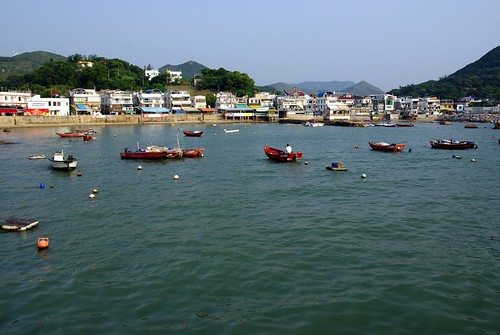
Yung Shue Wan, Lamma Island

Last Sunday, I visited Lamma Island (南丫島) with some friends who wanted to go to the beach. At around 10km between its northern and southern tips, Lamma is one of the said “outlying islands” of the Hong Kong SAR. It is located directly southwest of the much larger (10-15 times in terms of area) Hong Kong Island, opposite the locality of Aberdeen (Hong Kong Chai).

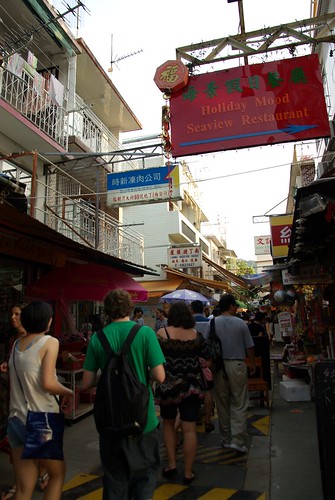
Ferries to Aberdeen and to Central are available at two different piers on the island. We took the one from Central that served the most populated area, the village of Yung Shue Wan (榕樹灣) in the northern part of Lamma. The boat ride took 25 minutes and we got off and were in a small little village, reminiscent of the one I visited in Cheung Chau (if you’ve been there — it’s another “outlying island”).

Yung Shue Wan, Lamma Island

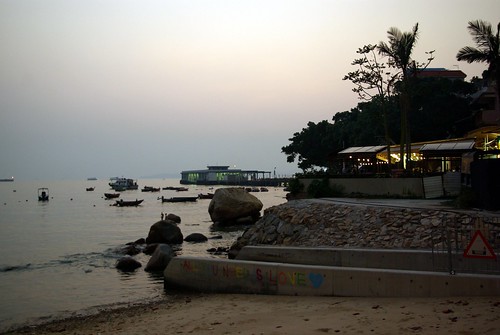
We set off to walk the entirety of the island, to reach the second port in the east. The trail being 5-10 km long, we never actually made it there. We stopped along the way to get fresh tofu dessert, before reaching the beach at sunset for a fantastically warm swim.

All you need is love - 榕樹灣 (Yung Shue Wan)

I returned to Lamma yesterday, to bring a friend from Montreal who was on his first trip to Hong Kong, to show him the marvels of the rural Hong Kong. We ate at one of the local seafood restaurants — so either I should’ve chosen my fish or ordered the grouper instead.

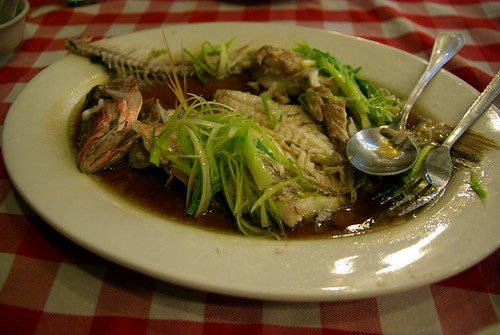
We had a red snapper steamed with soy sauce and scallions. It wasn’t extremely bad, but clearly did not satisfy my craving for Cantonese-style fish, the ginger & scallions fish that some call the perfect dish with the distinct Cantonese taste. While the snapper relieves you of $HKD170, the grouper is yours only if you’re willing to fork out $HKD300. Even if my stomach thought otherwise, my budget tourist wallet had the last call. The tung choi was pretty enjoyable.

Red Snapper + soy sauce + scallions

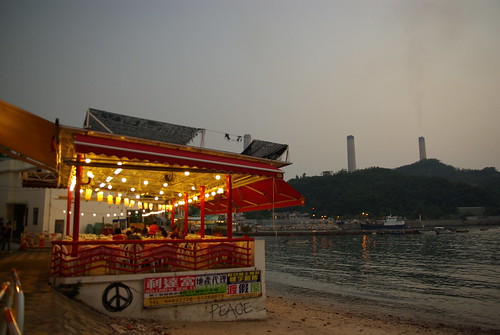
榕樹灣 (Yung Shue Wan) + coal power plant

So this would be my second time in Lamma, but I am already considering it the top place where I want to say. It would be pretty ironic that while I lived with the most “Hong Kong” view in Montreal (opposite Cité du Parc), that I would consider moving one of the least “Hong Kong” places in Hong Kong.

One last note about the island is that it is car-free. Yep, so no real motorized vehicles are allowed on the island! most people go about on foot or by bike (being a fervent cyclist, I was hoping not to lose the habit in Hong Kong). On the other hand, look at the previous picture. Do you notice the huge chimneys with a plume of black smoke coming from one of them? This is the first instance of a coal power plant that I am seeing with my own eyes… Not quite as smoky as the ones in SimCity, but still rather scary. Apparently, this plant powers Hong Kong Island, Ap Lei Chau and Lamma. There is a wind turbine too.

SOGO crossing, Causeway Bay, Hong Kong

Posted on

L’intersection du SOGO – du nom du grand magasin dominant ce coin de rue – est probablement l’un ou le lieu le plus cher à Hong Kong en termes d’affichage publicitaire. La confluence d’au moins cinq rues différentes, celui-ci rivalise en achalandage avec l’intersection de Shibuya à Tokyo ou Times Square à Manhattan. The SOGO … Continue reading “SOGO crossing, Causeway Bay, Hong Kong”

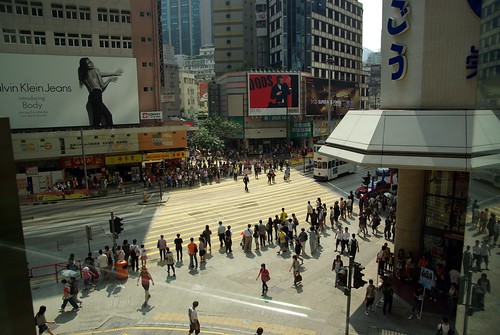
SOGO crossing, Hennessy Rd., Causeway Bay (1 of 4)

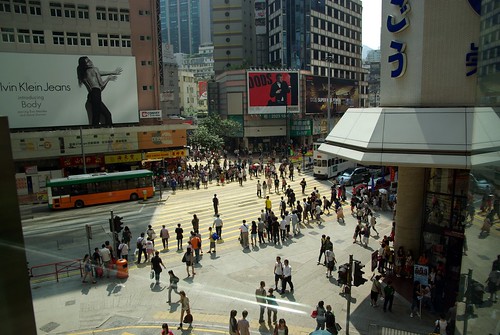
SOGO crossing, Hennessy Rd., Causeway Bay (2 of 4)

SOGO crossing, Hennessy Rd., Causeway Bay (3 of 4)

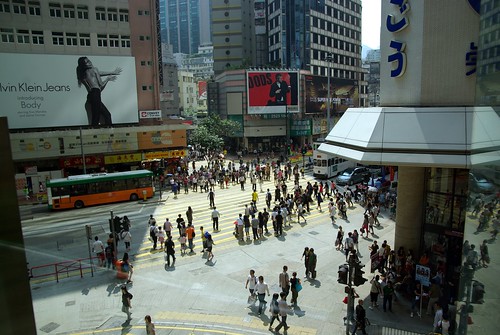
SOGO crossing, Hennessy Rd., Causeway Bay (4 of 4)

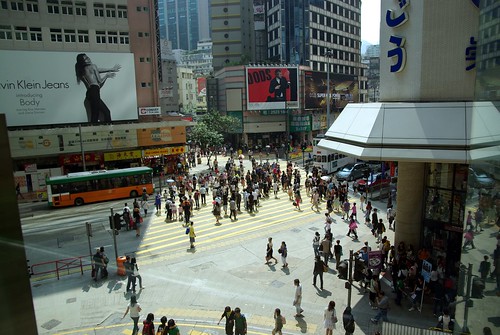
L’intersection du SOGO – du nom du grand magasin dominant ce coin de rue – est probablement l’un ou le lieu le plus cher à Hong Kong en termes d’affichage publicitaire. La confluence d’au moins cinq rues différentes, celui-ci rivalise en achalandage avec l’intersection de Shibuya à Tokyo ou Times Square à Manhattan.

The SOGO intersection, named after the department store dominating it, is probably Hong Kong’s most expensive spot for billboards. At the confluence of at least five different streets, it rivals in traffic with Tokyo’s Shibuya crossing or Manhattan’s Times Square.

Hong Kong ce soir

Posted on

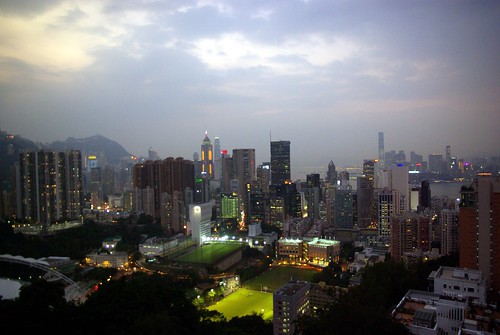
Voici la vue de la fenêtre de chez ma tante à Hong Kong. Je l’ai prise vers 18h ce soir. / This is a view from my aunt’s place in Hong Kong. I took this at around 6PM this evening.

View of HK (from Tai Hang)

Voici la vue de la fenêtre de chez ma tante à Hong Kong. Je l’ai prise vers 18h ce soir. / This is a view from my aunt’s place in Hong Kong. I took this at around 6PM this evening.

Comment servirait-on du smoked meat à Hong Kong?

Posted on

Chez Schwartz’s… Vendredi soir, ma première soirée en ville, des amis expatriés m’ont invité chez eux pour un fête à saveur de Montréal. J’avais caché dans mes valises, un morceau de viande fumée et du pain de seigle de chez Schwartz’s. La poitrine de boeuf, aussi connue sous le nom de « brisket » en … Continue reading “Comment servirait-on du smoked meat à Hong Kong?”

imgp0080
Chez Schwartz’s…

Vendredi soir, ma première soirée en ville, des amis expatriés m’ont invité chez eux pour un fête à saveur de Montréal. J’avais caché dans mes valises, un morceau de viande fumée et du pain de seigle de chez Schwartz’s.

La poitrine de boeuf, aussi connue sous le nom de « brisket » en anglais, est d’habitude une pièce de viande peu chère comparée à d’autres coupes, mais elle est particulièrement coriace. Pour l’attendrir, il faut la faire cuire longtemps, à feu doux.

Dans la cuisine chinoise, et dans notre cas à Hong Kong, on apprête aussi la poitrine de boeuf (牛腩 – niunan) dans des plats « populaires », souvent dans une marinade d’épices et de condiments chinois comme l’anis étoilé, la pelure d’agrumes séchée et la cannelle. Ce sont par exemple des currys (on coupe et on fait cuire) ou bien de la viande sur nouilles (on fait cuire et on coupe).

Parfois, on retrouve ce type de plats en version resto-culte, un peu comme notre Chez Schwartz’s à Montréal. Dans des restos aux files d’attente plus ou moins longues (les trottoirs ici sont franchement moins larges de toute façon), avec des photos de stars du Cantopop en compagnie du patron collés à la porte, on sert des tout simples, à peine plus chers que dans le casse-croûte sans notoriété, mais préparés avec une minutie et une fierté certaines.

九記牛腩, Central, Hong Kong
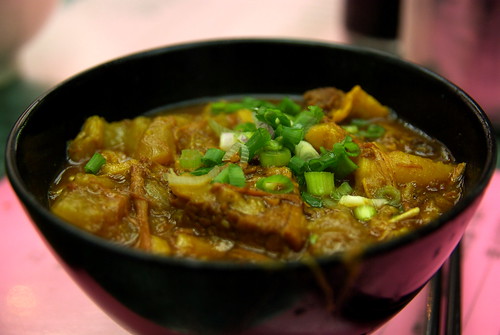
…et chez Kau Kee. Du curry chinois de boeuf sur nouilles.

Dans la catégorie du boeuf braisé au curry, Kau Kee dans Central – le principal quartier international des affaires de la ville – est un incontournable.

Le menu est minimaliste: trois choix de nouilles (riz, blé, oeufs) et deux choix de viande (avec ou sans curry). On ne sait pas s’il y a un menu en anglais, mais en tout cas pas de pancarte dans une langue autre que le chinois.

Beef Brisket - 安利 On Lee Restaurant
Poitrine de boeuf sur nouilles de riz…

Beef Brisket - 安利 On Lee Restaurant
…et sur nouilles aux oeufs

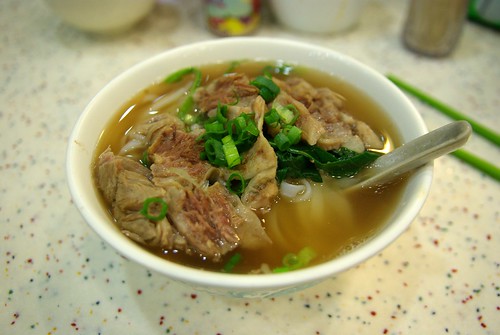
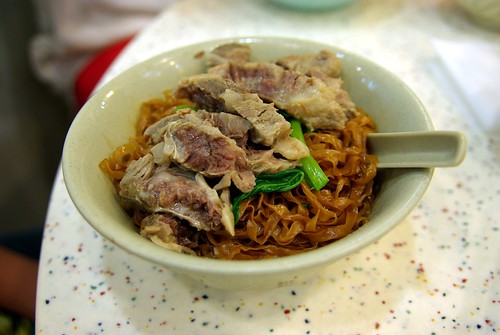
Hier, je suis allé essayer le Restaurant On Lee (安利) dans le quartier populaire de Shau Kei Wan, à plusieurs stations de MTR à l’ouest des grands centres touristiques de l’Île de Hong Kong. On Lee a son propre mur des célébrités, remplis de noms célèbres locaux.

Parlons bouffe maintenant: les tranches de smoked meat poitrine, “ngau lam”, sont coupées à même un morceau cuit entier, persillé et encore entouré de l’enveloppe musculaire. C’est le gras et cette enveloppe qui donnera au boeuf toute sa saveur. La viande est ensuite déposée sur des nouilles avec ou sans bouillon (bouillon au glutamate monosodique, probablement). On agrémente la soupe de quelques balles de poisson et d’échalote hachée.

En Chine, il n’y a pas que la viande qui est prisée. Les cartilages sont également des bouts mangés par les Chinois (votre serviteur aime bien ça aussi, pour en avoir mangé aujourd’hui pour le lunch). On laisse souvent les cartilages dans les recettes de poitrine, et on servira parfois des nouilles ou du riz nappés d’un ragoût aux cartilages de boeuf. Le cartilage mariné prend une consistance à mi-chemin sur le Jell-O, collant gentiment à nos incisives.

Celebrating the Mid-Autumn Festival in Hong Kong

Posted on

Last weekend was Mid-Autumn Festival, one of the important holidays in the Chinese calendar (and a public holiday in Hong Kong). With the group of friends met on the day before and a handful of Montrealers, we set out to Victoria Peak, aka “The Peak”, and Hong Kong Island’s response to our Mount Royal. As … Continue reading “Celebrating the Mid-Autumn Festival in Hong Kong”

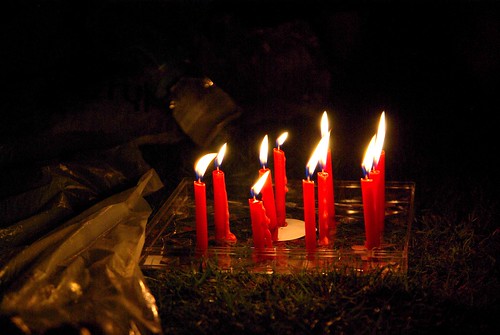
Candles for Mid-Autumn Festival on the Peak

Last weekend was Mid-Autumn Festival, one of the important holidays in the Chinese calendar (and a public holiday in Hong Kong). With the group of friends met on the day before and a handful of Montrealers, we set out to Victoria Peak, aka “The Peak”, and Hong Kong Island’s response to our Mount Royal.

As a Canadian and North American, I was pretty surprised to learn on that night that drinking in public parks is alright, especially under the comforting watch of uniformed policemen. The mood of Mid-Autumn Festival reminded me of O-Hanami in Japan and maybe that of Tam-Tams in Montreal (substituting the alcohol for something else).

While I was celebrating at The Peak, my aunt’s little family set out to the beach at Repulse Bay, in South Hong Kong Island. She told me that hordes of teenagers, including a large delegation of foreign ones, invaded the beach with their lanterns, candles and bottles of schtuff.

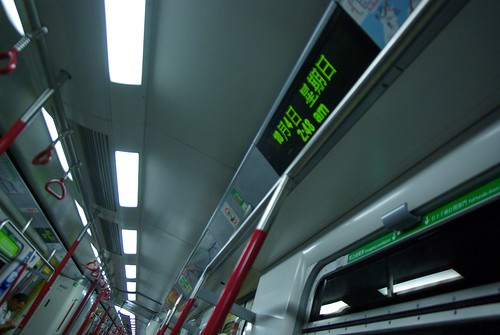
In the end, I was very glad that the MTR was running the entire night:

2:48AM in the MTR

The PRC at Sixty, in Hong Kong

Posted on

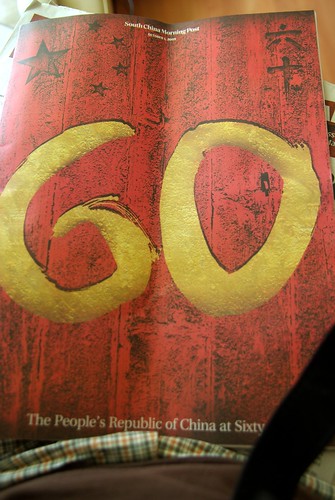
This is a copy of the South China Morning Post on October 1st, 2009, sixty years after the founding of the People’s Republic of China. The mood is generally (and vastly) positive. It’s the sixtieth anniversary — a very important anniversary in Chinese culture — since Mao declared the founding of the PRC in Beijing, … Continue reading “The PRC at Sixty, in Hong Kong”

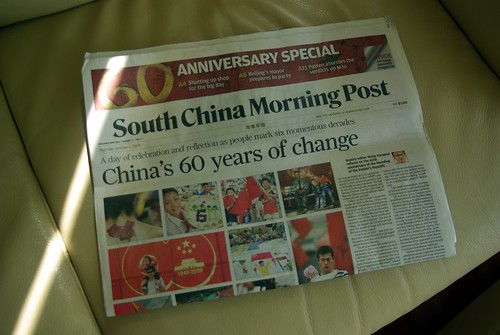
SCMP: China's 60 years of change

SCMP: 60 years of the PRC

This is a copy of the South China Morning Post on October 1st, 2009, sixty years after the founding of the People’s Republic of China. The mood is generally (and vastly) positive. It’s the sixtieth anniversary — a very important anniversary in Chinese culture — since Mao declared the founding of the PRC in Beijing, announcing the end of decades of political instability (perhaps breaking for more socio-economic instability in the next two decades…).

In the special insert published by the SCMP, you could notice full-page ads by local Hong Kong companies, many of which are property firms with many main projects now in Mainland China. I did not have time to read the entire newspaper, but there was an opinion editorial by former Hong Kong governor Chris Patten, criticizing the legacy of Mao Zedong.

On my way to where I was staying, on Hong Kong Island, I passed the Harbour area at Admiralty (Kum Chong) and Wan Chai, and saw fireworks reflecting on the windows of skyscrapers. When I arrived at my relatives’ home, they were watching the coverage of the big show in the capital Beijing. The setups were attractive and reminiscent of those shown during the Beijing Olympics opening ceremony (I guess they figured it might be nice to use that technique of luminous human wave). No big surprise: Zhang Yimou, the film director behind the Beijing opening, is also behind National Day celebration.

For the duration of the show, we were trying to guess what Chinese leaders were shown at the camera. Yes, there was a huge amount of face-giving, or rather TV-time face-giving, to China’s present and past leaders. So, we saw a lot of Hu Jintao, who looked like he was sweating badly, Jiang Zemin, who we saw closing his eyes a couple of times (he ain’t a spring lamb no more), and former Premiers Zhu Rongji (now greyish) and probably Li Peng (serving during 1989). Awkward moment: these same leaders in full-clad suits dancing along the show’s ending song.

Hong Kong, c’est aussi la plage

Posted on

Désolé de le rappeler, mais Hong Kong est aussi une ville tropicale. En plus de gratte-ciels et centres commerciaux à n’en plus finir, la Ville du Monde de l’Asie possède également quelques plages qui font la joie des baigneurs. Celle à laquelle on est allé est un genre de secret bien gardé : South Bay … Continue reading “Hong Kong, c’est aussi la plage”

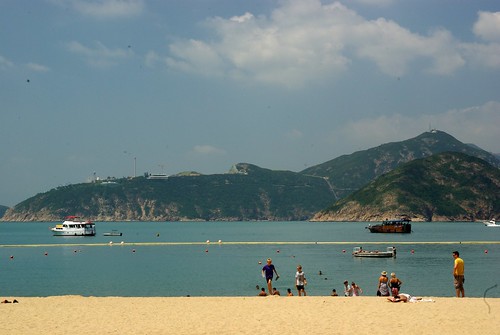
South Bay Beach, Hong Kong

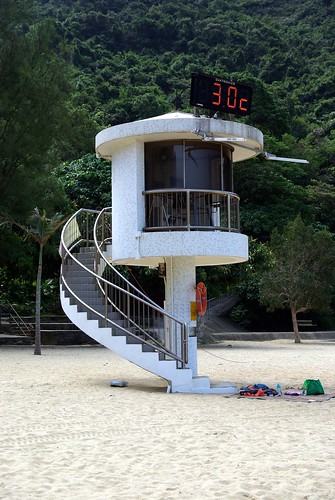
30C

Désolé de le rappeler, mais Hong Kong est aussi une ville tropicale. En plus de gratte-ciels et centres commerciaux à n’en plus finir, la Ville du Monde de l’Asie possède également quelques plages qui font la joie des baigneurs.

Celle à laquelle on est allé est un genre de secret bien gardé : South Bay Beach (南灣泳灘). Situé au sud de l’île de Hong Kong, on s’y rend par un chemin bifurquant de celui menant à l’enclave touristique de Stanley. La plage de South Bay Beach est très familiale et même un peu vide en journée de semaine. C’était pourtant entre deux congés fériés hier (le 1er octobre est Fête nationale, tandis que le 3 octobre cette année est Lune d’automne), mais les visiteurs étaient peu nombreux.

La plage de Repulse Bay (淺水灣泳灘) non loin est beaucoup plus populaire, car en plein sur le chemin de Stanley, et connu comme l’un des endroits les plus chers où vivre à Hong Kong. Comme South Bay Beach, c’est une belle plage aménagé et propre, malgré qu’on ne voit pas bien loin dans l’eau.

Tout près, on trouve aussi la Middle Bay Beach (中灣泳灘), lieu connu de la communauté gaie locale.

À part de ça, on peut aller dans les îles, comme à Cheung Chau, où j’ai vu une belle plage, que des amis ont déjà essayé.

Wikipedia fournit une bonne liste des plages de Hong Kong (en anglais).