Archive for the ‘En Chine 2008 / In China 2008’ Category

How-to guide for Kenting during Spring Scream (part three)

Thursday, June 19th, 2008

IMGP0255
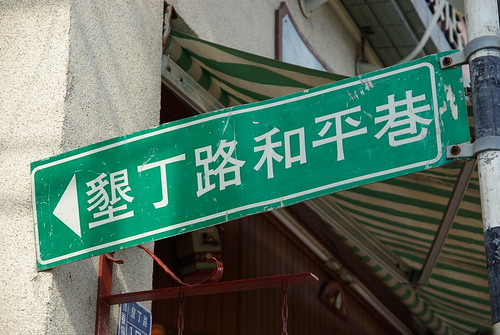
Kenting Road and Peace Lane

This entry is follow-up of this previous article, and covers Saturday and Sunday of Spring Scream 2008 weekend (April 5-6, 2008).

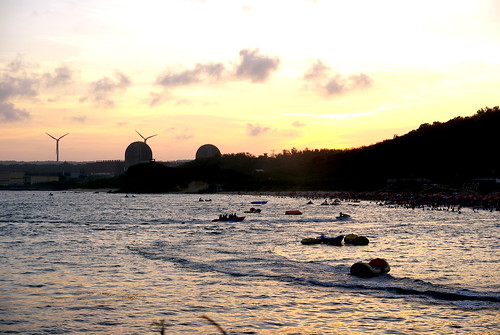
Saturday was the night that I decided to skip Spring Scream, and attend Spring Wave, a (more) commercial version of the outdoor music festival. In terms of notoriety, the bands featured at Spring Wave were usually more pop, and also more popular, and all played on the same single huge stage. On the night before, Sodagreen, Tanya Chua and Cyndi Wang performed at the Maobitou park, just across the bay from Kenting (Da Wan), but some 12km to go around the bay, and the nuclear power plant, seen here below:

Hengchun Nuclear power plant

Can you believe that! In a charming location such as Kenting (otherwise a national park), they built a nuclear plant just looming the beautiful beach of Nan Wan… I will come back to all these Nan Wan, Da Wan, and other place names… They are all considered to be in “Kenting” (the name of the whole national park), but are separate constructed areas, Da Wan being what can be considered as the main Kenting agglomeration. Bear in mind that this town is tiny (probably less than a thousand), but fills up like mad during holidays.

Lisez la suite de cet article / Read the rest of this entry »

How-to guide for Kenting during Spring Scream (part two)

Wednesday, June 18th, 2008

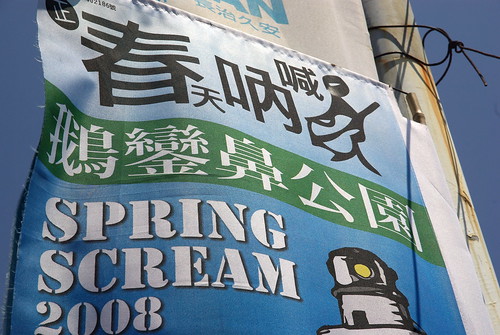
Spring Scream 2008, Kenting
Spring Scream 2008 Double Rat at Eluanbi

This is a follow-up to the previous article on Kenting during Spring Scream, where I described how I managed to reach the small town.

This entry covers Friday of Spring Scream 2008 weekend (April 4, 2008). 

On Thursday night in Kenting, I spent my time in town, relaxing like I would in any resort town. Kenting is a small small town, where there is little action outside of long weekends and holidays season. The largest town nearby is Hengchun, where many people descend to Kenting. According to my host, you will find cheaper deals and better quality for food in Hengchun. I just saw how it looked like on the way in and out of Kenting, and it looked like an ancient 19th century Chinese town, like I’ve seen in Muar, Malaysia, and then Kaiping, Guangdong, in China.

Lisez la suite de cet article / Read the rest of this entry »

How-to guide for Kenting during Spring Scream (part one)

Wednesday, June 11th, 2008

This entry covers Thursday of Spring Scream 2008 weekend (April 3, 2008).

I visited Kenting during the Spring Scream 2008 (Double Rat), an outdoor music and arts festival held at the southernmost point of the island of Taiwan. I wanted to write a how-to for people who couldn’t read Chinese fluently, because it has been a real adventure to find the right information to get to Kenting.

>> See Flickr set

I entered Taiwan through Taipei, on a Cathay Pacific flight from Hong Kong. Spring Scream was on the Ching Ming (tomb-dusting) long weekend, and there was a fare war between companies that served HKG-TPE, namely HK-based Cathay (and affiliate Dragonair), and Taiwan-based EVA and China Airlines. So, I paid something like 1500HKD, after taxes and fees.

Lisez la suite de cet article / Read the rest of this entry »

CBC’s Don Murray on the 19th anniversary of the 6/4 events

Sunday, June 8th, 2008

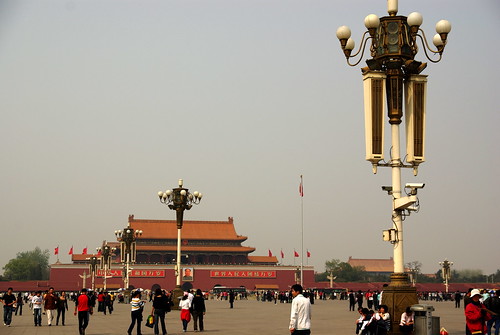
Tian'anmen Square + Gate

Don Murray, former correspondent in Beijing, the first permanent one in the Chinese capital for CBC/Radio-Canada, in 1980, just wrote an essay on the 19th anniversary (already, eh) of the Tian’anmen Square events in 1989. He commented on the Sichuan Earthquake, and made remarks on the government’s role in its coverage by the media.

In places like Hong Kong, tens of thousands of people still participate in the annual “6/4″ (which is how it’s called by Chinese, for the date it happened on, June 4th) candlelight vigil.

[I did not realize it when I wrote this piece, but the previous link was actually a translation of a news article by the CCTV, China's official TV station! Of course, they labeled the event as a commemoration for the Sichuan Earthquake, but made no mention that it was the annual 6/4 vigil too... Again, one of these things about China: if you know about it, good for you; otherwise, it's none of your business!]

I am quick to highlight the comments left at the bottom of Mr. Murray’s article. They are apparently from Chinese people emigrated to Canada, and point out that what the normal folk wanted from the protests in 1989 was merely a denunciation of corruption, and a better livelihood for the ordinary guy. This has been my reading of the events, also, since watching Gate of the Heavenly Peace (Wikipedia), a documentary made in 1995 by PBS.

Lisez la suite de cet article / Read the rest of this entry »

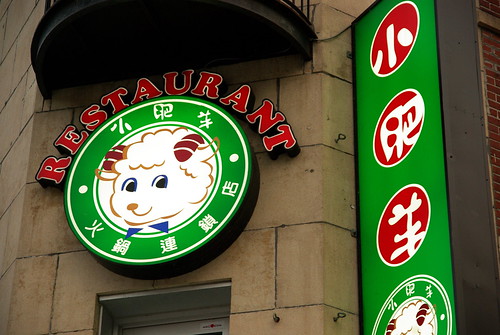
Xiao Fei Yang in China

Thursday, June 5th, 2008

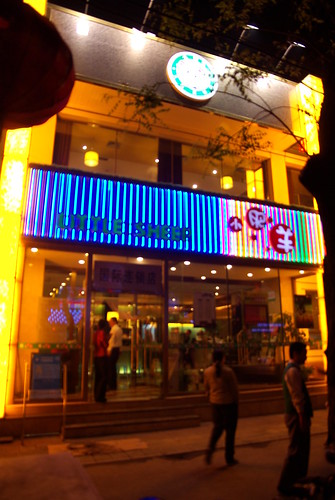
小肥羊/旺角,香港

小肥羊 (Xiao Fei Yang), the Mongolian hot pot restaurant in Montreal, is in fact a chain in China. Known as “Little Sheep” in English, it is a well-known brand in China, one that is marketed as an upscale hot pot place. In contrast with Montreal, xiao fei yang is not an all-you-can-eat in China.

The first picture (here above) is that of the Mong Kok branch of Xiao Fei Yang in Hong Kong, located on premium land.

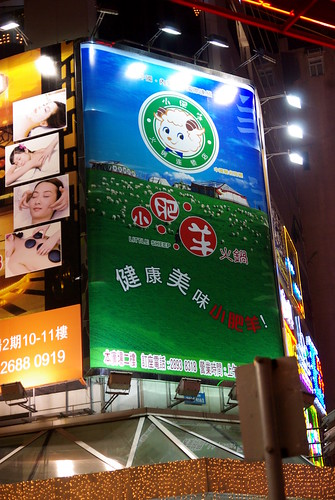
小肥羊 xiaofeiyang on Guijie, Beijing

The first one that I encountered was one of Beijing’s Xiao Fei Yang, on Guijie. The guy at the bottom right of the picture is the parking valet!

小肥羊/銅鑼灣,香港

The next was one in Causeway Bay, Hong Kong. I almost ate there a few times, after running out of ideas for restaurants to eat at. Given that it was roughly 30 degrees Celsius each time, I promptly shook the envy off.

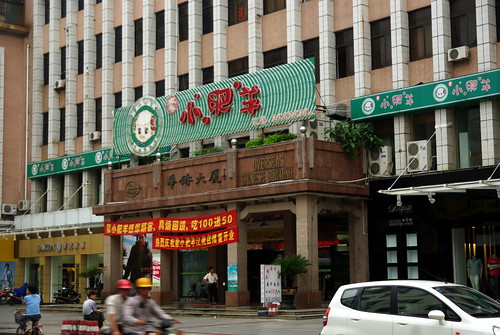
小肥羊 in 开平 Kaiping

The most surprising place to find a Xiao Fei Yang was in Kaiping (开平), a five-minute walk eastward from the city’s main bus terminal. Kaiping, also known as “Hoiping” in Cantonese, is a town of 700,000 souls, roughly 4 hours from Hong Kong by coach bus and/or speedboat ferry. The city might have UNESCO sites in its vicinity, but does every mid-sized city in China have its Xiao Fei Yang?

Little Lamb - Quartier Chinois de Montréal

Regarde les Chinois : Terry Chan

Monday, June 2nd, 2008

Terry Chan

Regarde les Chinois poursuit sa route à Beijing. Le mois dernier, j’ai rencontré Terry Chan, un Torontois qui vit à Beijing depuis l’automne dernier pour étudier le Mandarin. Je l’ai rencontré dans le coin touristique de Houhai, un lac au centre de Beijing, avec des restaurants, bars et boîtes de nuit dans ses environs, desservant surtout des expatriés et des jeunes locaux.

Regarde les Chinois continues on its trek in Beijing. A month ago, I met Terry Chan, a Torontonian who lived in Beijing since last Fall, learning Mandarin. I met him at the tourist area of Houhai (后海), a lake in Central Beijing, with restaurants, bars and nightclubs built in its surroundings, serving mostly an expatriates and young locals.

Lisez la suite de cet article / Read the rest of this entry »

Taipei signage

Thursday, May 29th, 2008

Taipei, Taiwan

Quite some ordinary signage on an ordinary building, across from Executive Yuan and Control Yuan intersection in Taipei.

Des panneaux ordinaires, sur un immeuble ordinaire, sur la même intersection que le Yuan Exécutif et le Yuan de Contrôle à Taipei.

Regarde les Chinois : Joe Kan

Monday, May 26th, 2008

Joe Kan

Ceci est la première de cinq entrevues réalisées lorsque j’étais à Beijing en avril dernier, pour la section Regarde les Chinois de CLC. J’ai rencontré Joe Kan, un Canadien Chinois né à Edmonton et qui a étudié et vécu à Montréal pour sept ans, et qui travaille maintenant comme architecte basé à Beijing pour une firme américaine. Après avoir visité un nouveau complexe résidentiel à être construit près du centre de Dongzhimen, nous sommes allé nous asseoir à la succursale toute proche de Din Tai Fung, une chaîne taiwanaise de restaurant connue pour leurs xiao long bao. On a parlé d’Edmonton, de la banlieue et de la redéfinition des espaces urbains et publics en Chine.

This is the first of five interviews that I conducted when I was in Beijing in mid-April, for CLC’s Regarde les Chinois section. I met Joe Kan, an Edmonton-born Canadian Chinese who studied and lived in Montreal for seven years, and who has been for the past year a Beijing-based architect working for an American firm. After visiting a new residential complex in construction near the Dongzhimen hub, we sat at the nearby branch of Din Tai Fung, a Taiwanese restaurant chain famous for its xiao long bao. We talked about Edmonton, suburbs, and the redefinition of urban and public spaces in China.

Lisez la suite de cet article / Read the rest of this entry »

Lost in Kowloon City (Part 2)

Monday, May 19th, 2008

HK at night in Kowloon

On the evening of April 11, 2008 (see part 1), I was supposed to find Cattle Depot Artists’ Village, but instead missed my stop and landed on the other side of the old Kai Tak airport, close to Choi Hung MTR station. (

see map)

Undeterred by the prospect of adventure (there may have been simpler means to find my way back) I eventually walked, mapless, into Wong Tai Sin, through Kowloon City (and the former walled city too), and a circle around To Kwa Wan / Ma Tau Kok. Two hours and a half later, these are the best pictures that I took.

It’s a different environment from what I am used to on Hong Kong Island and its commercial buildings. Instead, I saw buildings associated with the old Kai Tak airport, endless rows of garages (and mod shops), outdoor restaurants, and affordable public houses.

***

Le soir du 11 avril 2008 (voir 1ère partie), je devais me rendre au Cattle Depot Artists’ Village, mais j’ai manqué mon arrêt et ai descendu de l’autre côté de l’ancien aéroport Kai Tak, près de la station de MTR Choi Hung. (

voir carte)

Au lieu de m’en faire (il y a des moyens plus facile pour se retrouver), j’ai décidé de partir à l’aventure et de retourner à la destination voulue à pied. Je me suis éventuellement guidé, sans carte, vers Wong Tai Sin, ai passé à travers Kowloon City (incluant l’ancienne ville fortifiée) pour finalement faire une boucle sur To Kwa Wan / Ma Tau Kok. Deux heures et demie plus tard, ce sont ici les meilleures photos que j’ai prises.

C’est un paysage urbain différent de celui dont je suis habitué du côté de l’île de Hong Kong et ses immeubles commerciaux. Au lieu de cela, j’ai vu des bâtiments associés à l’ancien aéroport, des rangées de garages (et mod shops) à n’en plus finir, des restos extérieurs, et des logements publiques à prix abordable.

“Blogging is more about fun than anti-censorship crusades”

Sunday, May 18th, 2008

SCMP - Blogging is more about fun than anti-censorship crusades

In the South China Morning Post of March 30th, 2008, the “Changing Faces” column meets with Steven Lin Jiashu (林嘉澍), the blogger behind Antiwave. He and his colleague Randy Jiang, aka “Pingke”, make commentary on current issues and produce interviews with people not heard on mainstream radio. “One of my favourite projects is an interview with Time magazine reporter Simon Elegant and blogger Vicky Yang. Simon interviewed Vicky in his report China’s me generation, a cover story for the magazine’s November (2007) issue.”, says Lin in the interview he gives in the SCMP.

***

Dans le South China Morning Post du 30 mars 2008, la chronique « Changing Faces » rencontre Steven Lin Jiashu (林嘉澍), le blogueur derrière le Antiwave. Lui et son collègue Randy Jiang, alias « Pingke », font du commentaire sur des sujets actuels et produisent des entrevues avec des gens négligés par la radio grand public. « L’un de mes projets favoris fut une entrevue avec le journaliste du magazine Time Simon Elegant et la blogueuse Vicky Yang. Simon avait interviewé Vicky dans son reportage China’s me generation, un article en page couverture de l’édition de novembre (2007). », raconte Lin dans l’entrevue qu’il donne au SCMP.

The Dujiangyan earthquake

Monday, May 12th, 2008

Deep Magazine - On the Dujiangyan dam 都江堰

The strong earthquake that shook the province of Sichuan, which epicenter was said to be around Dujiangyan (都江堰), a city of 600,000 people at 15km northwest of the capital Chengdu, hits strangely close to home. One of my good friends, now living in Montreal, is originally from Dujiangyan and she is visiting her hometown for this month. When I traveled to Beijing last month, we briefly met there on her transit, and I also met her friends, who gave me a copy of this magazine (see picture) that they worked on as colleagues in Beijing.

Une copine à moi vient de Dujiangyan, est en visite là-bas en ce moment. Ceci est la couverture d’un magazine (article en couverture sur Dujiangyan) publié par la compagnie pour laquelle elle travaillait avant, à Beijing. Pas encore de nouvelles d’elle.

Pogné à Newark, dé-pogné en Chine

Sunday, May 11th, 2008

Chinese flag flying over Tsinghua University 清华大学

I am stuck at the Newark Airport, having my 5PM flight for Montreal cancelled, waiting for the next one at 8:25PM. It gives me time to relax, and rip a few CDs… The news concerning CommeLesChinois.ca are that it is no longer blocked in China!

The reasons why it was unavailable in the first place remain obscure. My friends in China said that it had been blocked before I had even started adding contents to the site. The machine hosting this site (twiddle at dreamhost.com) was always the same.

So, it was while browsing this site’s stats that I found out that I had hits from Mainland China. Someone in Shanghai googled my site out on the Tous les jours bakery boycott story, on April 28th, 2008.

An unrelated tale from the Wall, the Radio-Canada.ca was once again (presumably) banned last week, according to my own “investigation”, confirmed by Radio-Canada’s tech columnist.

***

Je suis pogné à l’aéroport de Newark, après que mon vol à 17h vers Montréal ait été annulé, en attendant le prochain à 20h25. Ça me donne le temps de relaxer et ripper une coupe de CDs… Et les nouvelles concernant CommeLesChinois.ca sont que ce n’est plus bloqué en Chine!

Pourquoi ce n’était pas accessible initialement, je n’en sais rien. Mes amis en China m’ont dit que c’était bloqué avant même que je ne commence à ajouter du contenu au site. La machine qui héberge le site (twiddle à dreamhost.com) a toujours été la même.

C’est en regardant les stats du site que je me suis rendu compte de hits venant de Chine Continentale. Quelqu’un à Shanghai avait alors trouvé, le 28 avril 2008, mon article sur le boycott du café Tous les jours.

Une nouvelle à part en provenance du mur: Radio-Canada.ca est à nouveau (présumément) banni en Chine depuis la semaine dernière, selon ma propre “enquête”, confirmé par Bruno Guglielminetti dans sa chronique techno.

Sunshine in Hong Kong

Saturday, May 10th, 2008

Sunny day in Hong Kong

Mid-levels escalator in Central, Hong Kong

Ding-Ding - 2HKD

Taken this Thursday, in Hong Kong.

九記牛腩 (kao kee ngau lam) curry noodles in Central

Friday, May 9th, 2008

九記牛腩, Central, Hong Kong

On Thursday for lunch, one of my uncles took me to one of those famous places that only locals know, a curry noodles place in Central called 九記牛腩 (literally “nine & co. beef brisket”). Everything is written in Chinese, including its sign! (At our table, sat Asian-looking English-speakers) The menu is one of those minimalistic ones: three kinds of noodles (yii mein, ho faan, mai faan), two kinds of soup base (curry or broth).

Lisez la suite de cet article / Read the rest of this entry »

Shenzhen and Dongguan

Friday, May 9th, 2008

Shekou, Shenzhen, China

Briefly put, Shenzhen is the Special Economic Zone saddled on the Chinese border with Hong Kong SAR, while Dongguan is a city, roughly the same size (we talk in terms of municipal delimitations) than the former. Some parts of Shenzhen look like Beijing, and is certainly one of China’s richest cities (if not the richest).

Yantian, Fengang Town, Dongguan, China

Last Tuesday and Wednesday, I travelled to Shenzhen and Dongguan, on my way back from Kaiping. It was a bus ride of about three hours (90 yuan) from Kaiping to Shenzhen’s Luo Hu hub (at the border with Hong Kong). I took the subway (5 yuan) to the end of the green line at Windows of the World and a cab (60 yuan) to the new suburb of Shekou (蛇口), in southwest Shenzhen, where one of my cousins, an expat sent overseas by his Montreal company, lives.

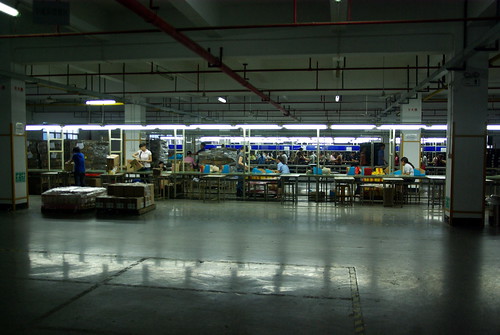
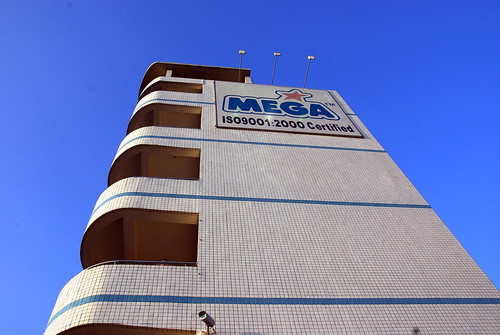
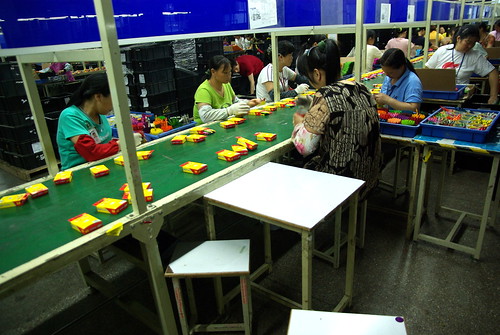
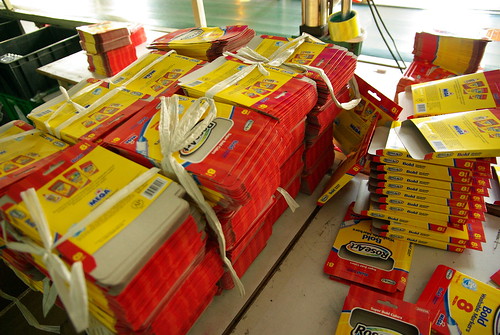
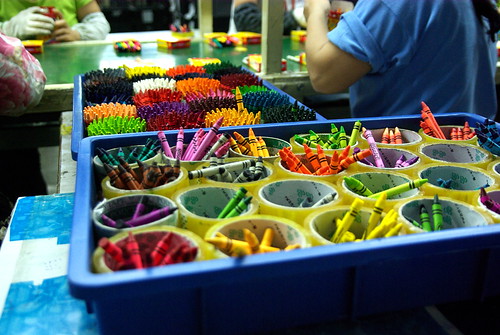
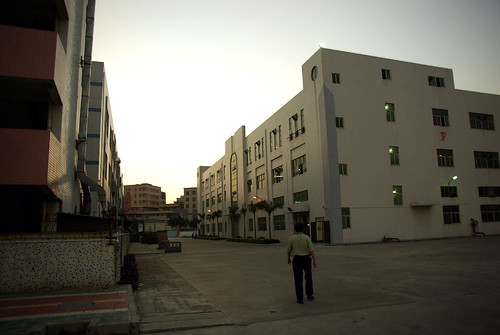
On the next day, I went to Dongguan, where I visited an uncle’s factory, in the district of Yantian (雁田 – not like the Shenzhen port), a 1h30 ride by private taxi from Shekou. Then, I returned to the northwest district of Shajing (沙井), to visit the factory where my cousin works.

More elaborate posts are to come, once I compile the pics.